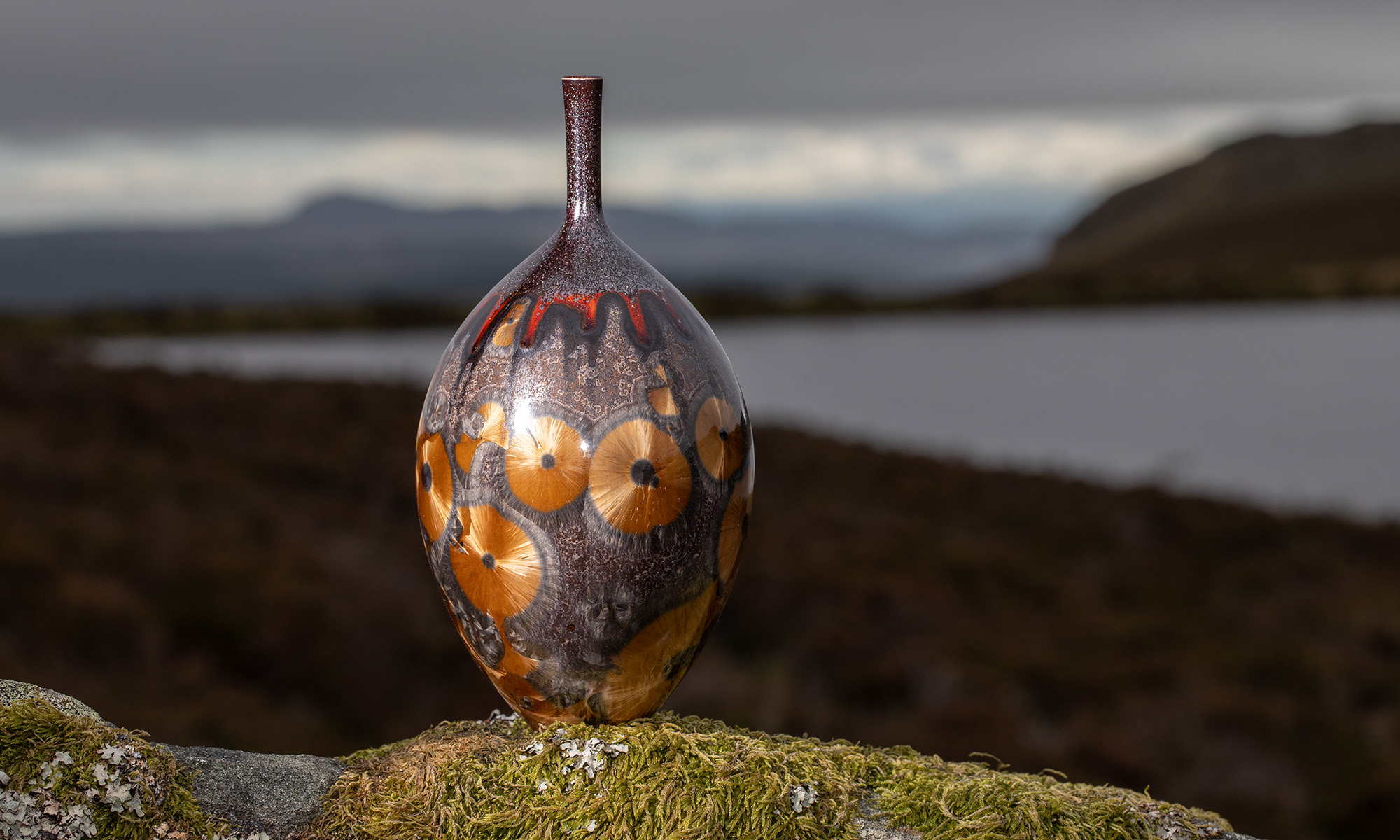
Crystalline Ceramics

Crystalline glazed porcelain forms by Richard Bideau

Crystalline Glaze

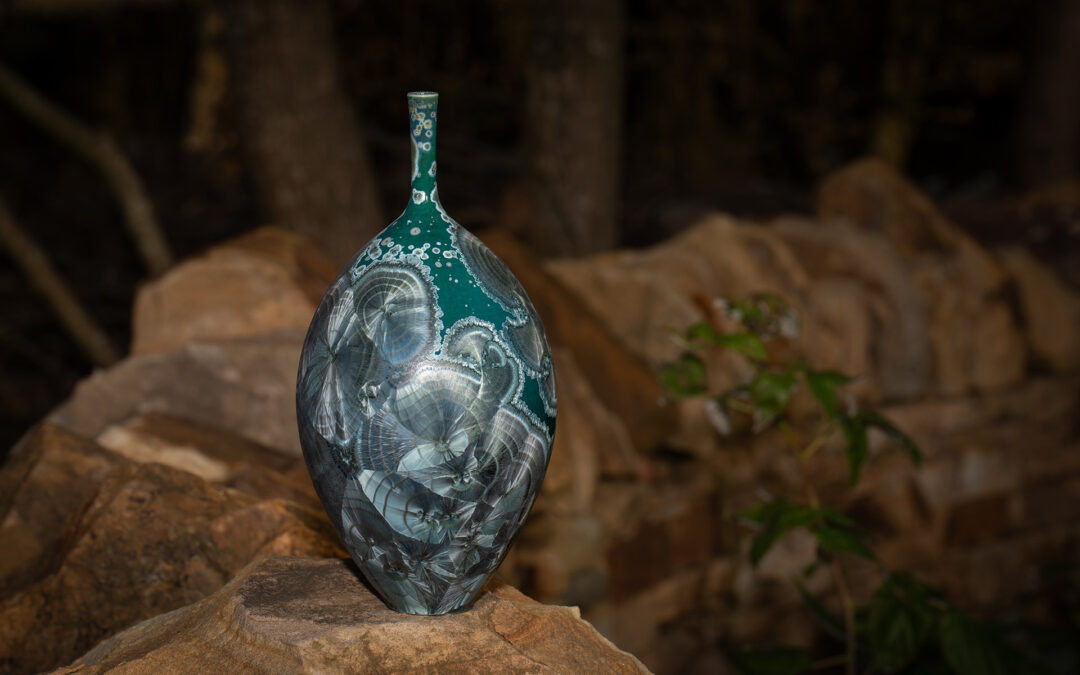
Careful control of chemistry and firing conditions give rise to glazes that produce crystals during the firing cycle. Crystals are stunning with fantastic shapes that shimmer like holograms as light catches them. The possibilities are almost endless…

About Me

I have been exploring the crystalline process since 1997, becoming a full-time potter in 2009. My former career in chemical engineering, coupled with a lifelong association with pottery have given me the skills needed to combine art and science.

Buying

My work is sold through art galleries and exhibitions. I also have a selection of pieces available to buy directy directly.

Recent Work

DA3

DA3

DescriptionIron khaki on the neck and an etched version of my dark green crystalline glaze on the body. This piece is unusual in having a powerful development of tiny speckles in the ground.DetailsCode: DA3 Year: 2026 Height: 220 mm Porcelain: TP169DA3. Houghton Hagg...
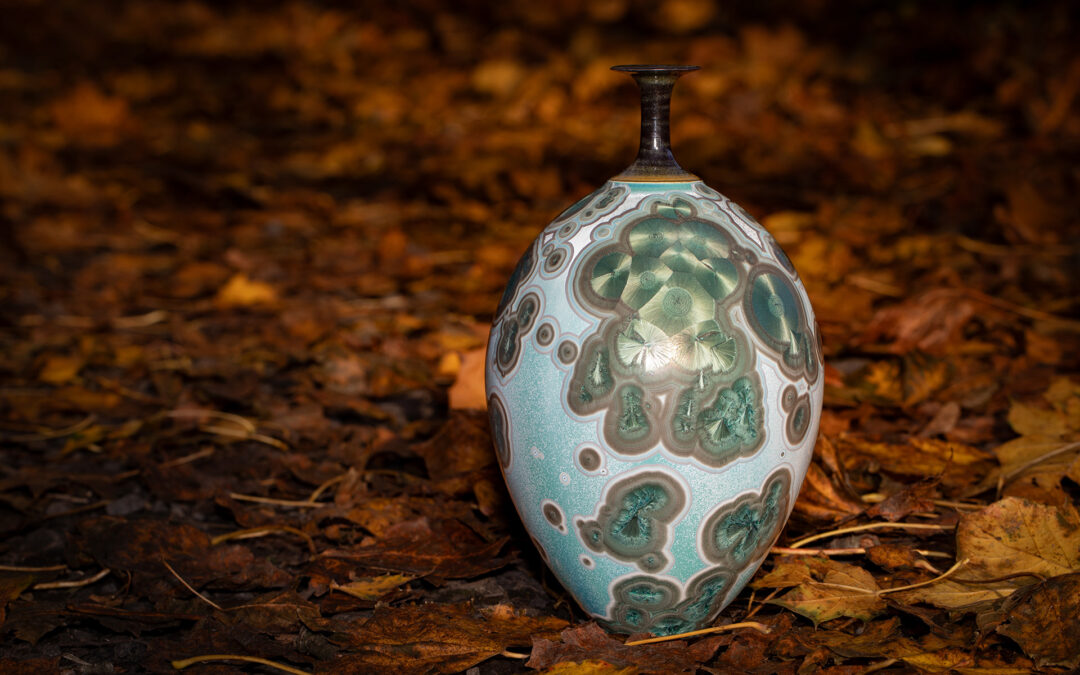
DA4

DA4

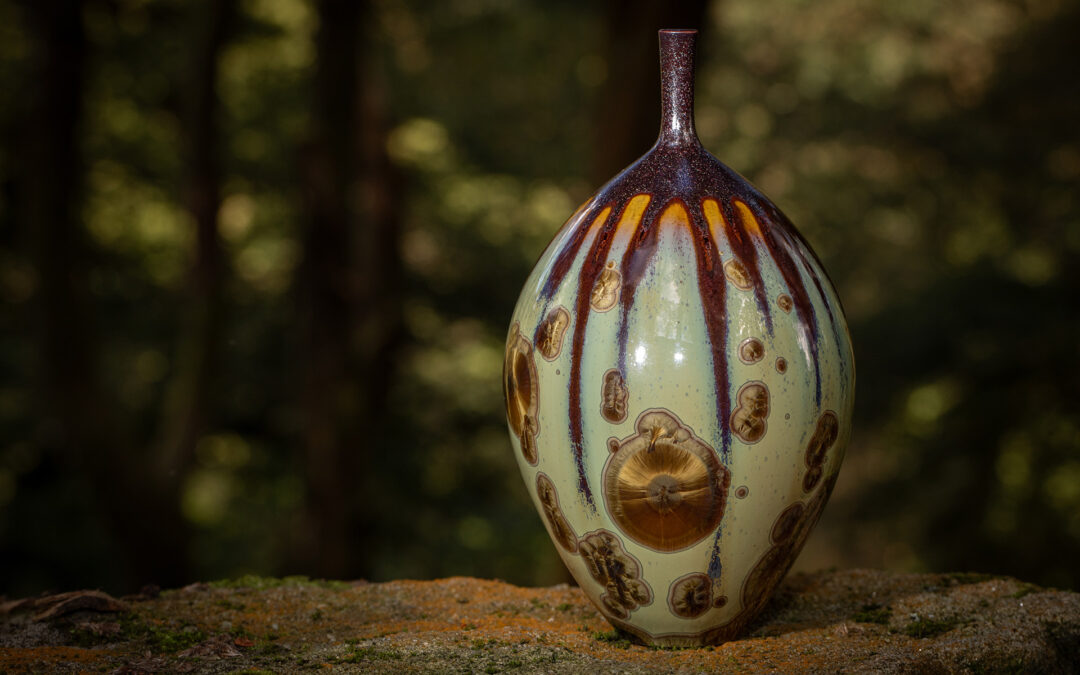
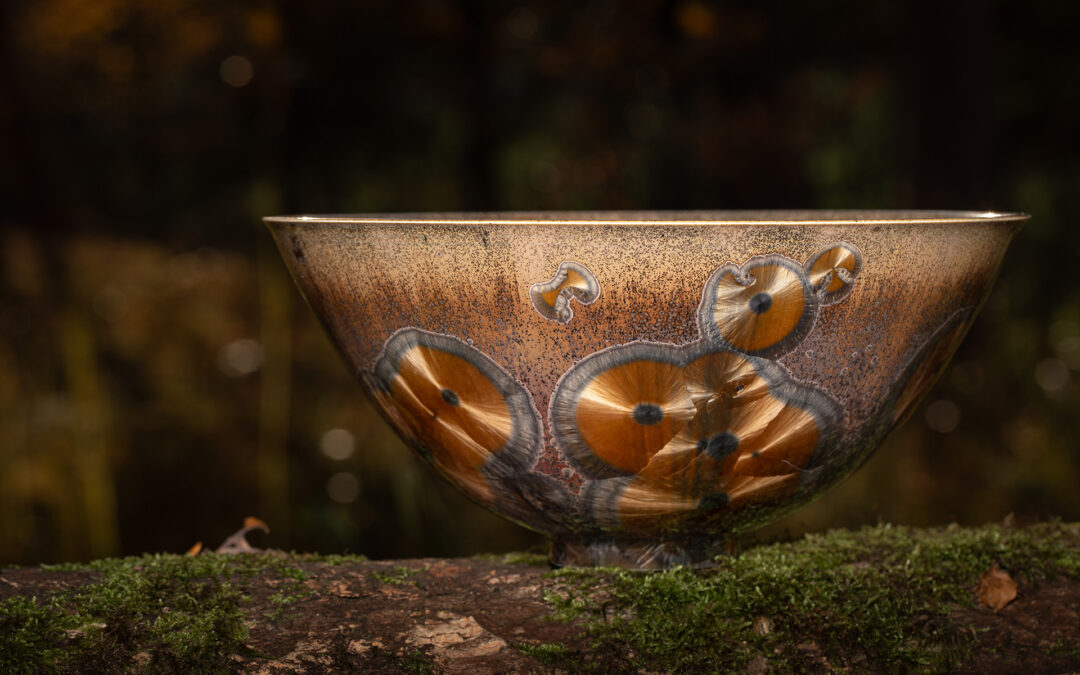
DescriptionIron gold crystlline glaze inside and out. The primary crystals have dark centres and fringes with vivid gold in between. The ground is complex, pale near the rim becoming darker with a hint of purple towards the foot.DetailsCode: DA4 Year: 2026 Diameter:...

DA6

DA6

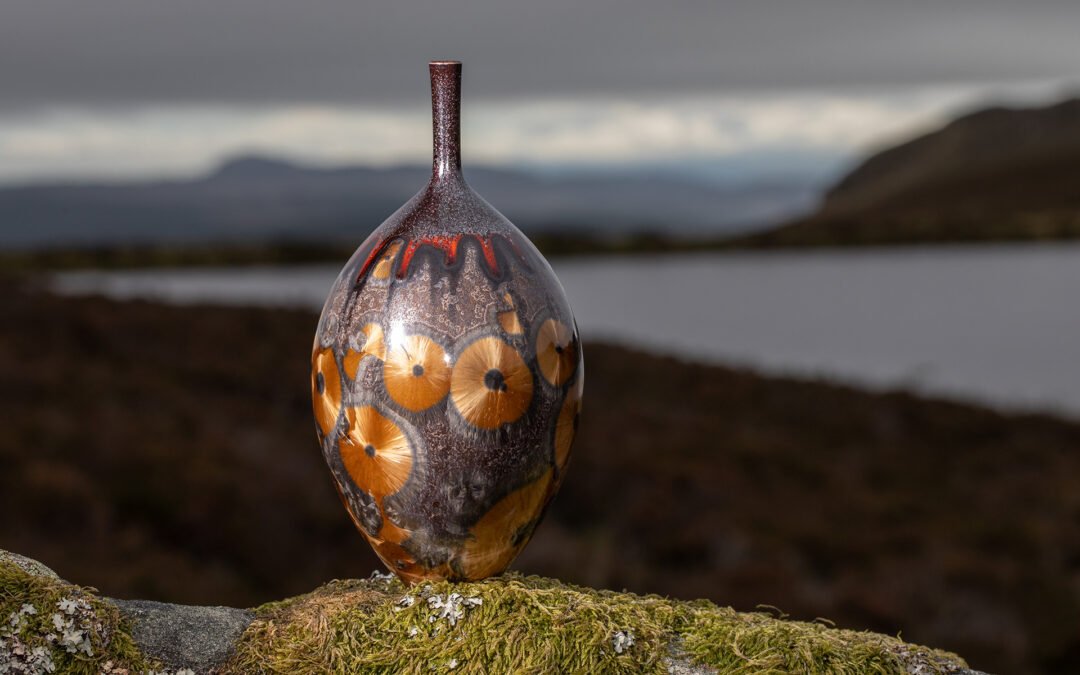
DescriptionIron aventurine and iron gold crystalline glazes on a porcelain bowl form. The aventurine glaze has tiny crystals within it that sparkle as light reflects from them. The crystalline glaze has large golden crystals set on a complex ground of secondaries. The...

D8G

D8G

DescriptionVivid green crystals with a hint of dusky blue on a deep green ground. The primary crystals have a holographic character with pronounced growth rings.  Brightly lit with direct sunlight and flash fill, the primary crystal colour tends to silvery. With...

Latest News

Potfest in the Park 2026

Potfest in the Park 2026

My next exhibition will be Potfest in the Park located in the beautiful grounds of Hutton-in-the-Forest, near Penrith in Cumbria. The show runs from Friday July 24th to Sunday July 26th, 10 am to 4:30 pm each day.

read more
Potfest in the Park 2025

Potfest in the Park 2025

My next exhibition will be Potfest in the Park located in the beautiful grounds of Hutton-in-the-Forest, Cumbria. The show runs from Friday July 25th to Sunday July 28th, 10 am to 4:30 pm each day.

read more
Potfest in the Park 2024

Potfest in the Park 2024

  My next exhibition will be Potfest in the Park located in the beautiful grounds of Hutton-in-the-Forest, Cumbria. The show runs from Friday July26th to Sunday July 28th, 10 am to 4:30 pm each day.The kiln problems I had in November 2023 have stimulated a great...

read more

For Sale

DA3

DA3

DescriptionIron khaki on the neck and an etched version of my dark green crystalline glaze on the body. This piece is unusual in having a powerful development of tiny speckles in the ground.DetailsCode: DA3 Year: 2026 Height: 220 mm Porcelain: TP169DA3. Houghton Hagg...
DA6

DA6

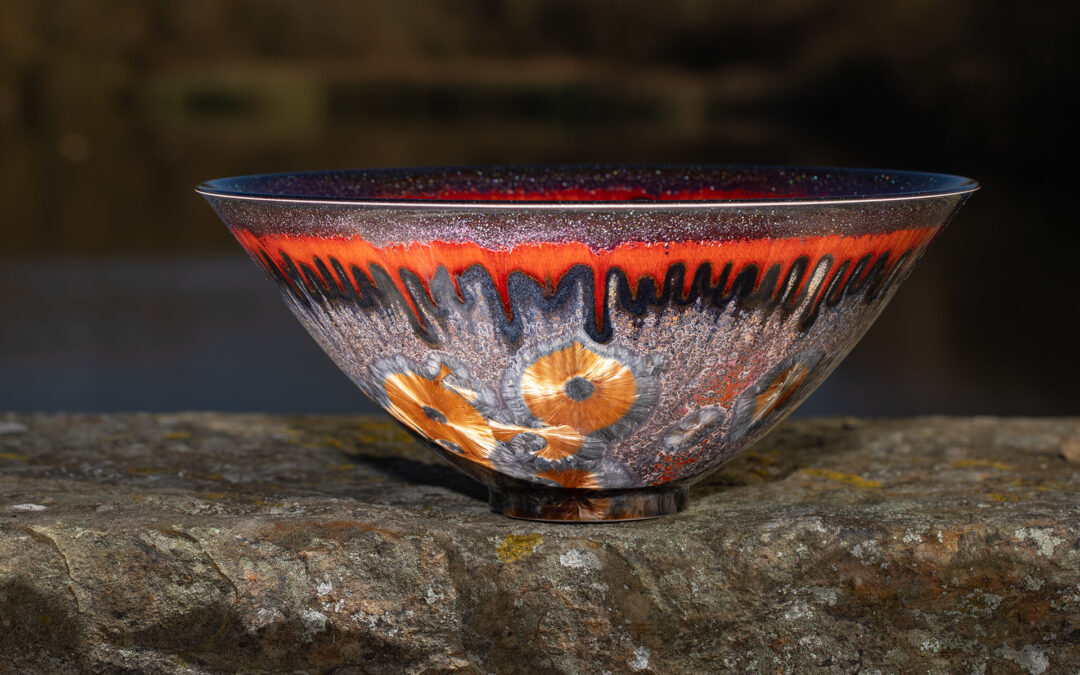
DescriptionIron aventurine and iron gold crystalline glazes on a porcelain bowl form. The aventurine glaze has tiny crystals within it that sparkle as light reflects from them. The crystalline glaze has large golden crystals set on a complex ground of secondaries. The...

D8E

D8E

DescriptionThere are two crystalline glazes with different chemistries here. The sparkling iron aventurine on the neck has created a complex interaction pattern with the green/gold crystalline glaze on the body.DetailsCode: D8E Year: 2026 Height: 185 mm Porcelain:...

D8P

D8P

DescriptionIron aventurine and my iron gold crystalline glaze. The aventurine has tiny plate-like crystals that sparkle as light catches them. The distinctive interaction pattern between the two glazes occurs spontaneously during the glaze firing. Where the two...

Stories

Hagg Wood – A day in the life of a potter

Hagg Wood – A day in the life of a potter

What does it mean to be a potter? The question is difficult to answer. The rewards are many but it can't be denied that there is a great deal of the mundane. The essential tasks of sieving and grinding are my least favorite. Opening the kiln after a glaze firing a...

Porcelain From the Carboniferous Period

Porcelain From the Carboniferous Period

With crystalline effects, the glaze is only a part of the process. The type of clay body also exerts a powerful influence on the fired result. For this reason, and many more besides, each potter, working in different parts of the world, each with its own raw...

Edinburgh and Deep Time

Edinburgh and Deep Time

Time we may comprehend, 'tis but five days elder than ourselves. Thomas Browne, Religio Medici, 1643. If the Eiffel tower were now representing the world's age, the skin of paint on the pinnacle-knob at its summit would represent man's share of that age… Mark Twain,...

Gritstone and Thunder

Gritstone and Thunder

Crystalline glazed surfaces have complex structures that change in appearance under different lighting conditions. For this photography session, the weather offered the possibility of some dramatic conditions: it was warm and humid, the wind, so often a powerful force...

Technical Articles

Testing a cup internal glaze for thermal compatibility

Testing a cup internal glaze for thermal compatibility

Cups need to withstand the thermal shock of having  hot liquid poured in over and over again. This places several requirements on the clay body and glaze coating, one of which is the need for the internal glaze and body to have compatible thermal expansion...

Ball Clay Sieve Residue

Ball Clay Sieve Residue

 Ball clays are an important constituent of my custom porcelain bodies. They influence the throwing characteristcs and exert a powerful influence on crystal growth. They tend to be minimally refined whole sediments containing coarse particles that have no place in a...

Testing a Floating Blue Glaze

Testing a Floating Blue Glaze

Recently, I was asked if I could formulate a glaze based on a recipe known as 'Old Forge B'. It is a type of glaze known as 'Floating Blue' so called because a blue opalescent layer of colour appears to float upon the glaze below. The mechanism is a high boron content...